 Routes
Modes & mode choice
Sea vs. Rail from China: Choosing the Right Mode
For cargo moving from China to Azerbaijan and the wider Caucasus there is no general answer to sea versus rail. There is a per-shipment answer, and it turns on the value density of the goods more than on the freight rate.
The two products you are actually comparing
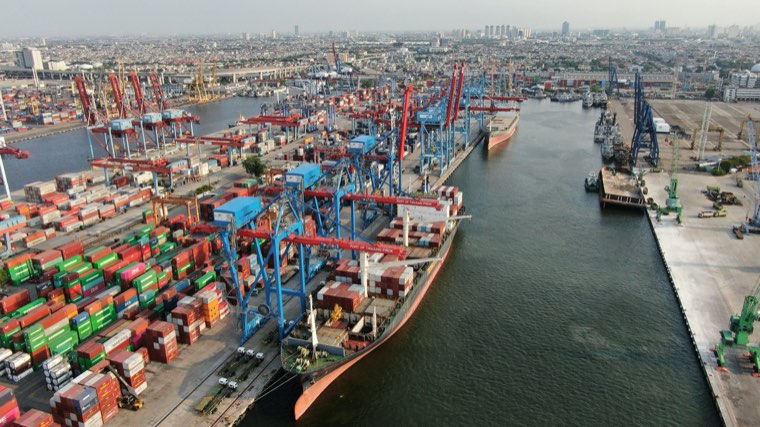
The sea option for this region is normally a container booking from a Chinese port to Poti or Batumi on the Georgian Black Sea coast, followed by a road or rail leg to Baku. It is a mature, heavily served routing with well-understood documentation, and the sailing frequency means there is usually something moving. Its length comes from the sea distance itself and from any transhipment on the way.
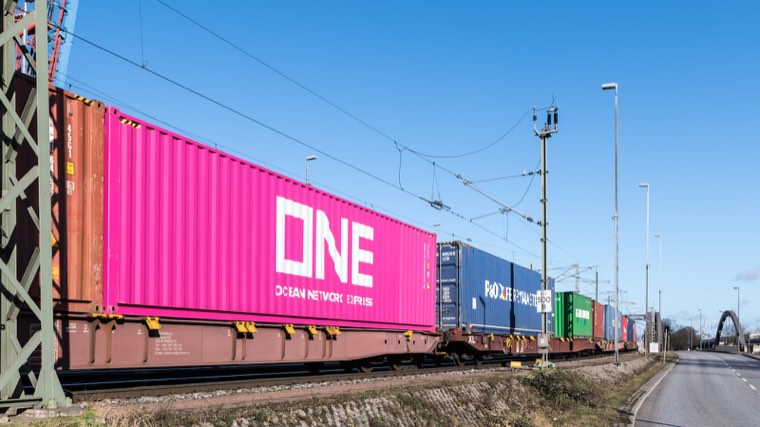
The rail option is a container moving overland, either across the Trans-Caspian Middle Corridor with its Caspian sea crossing, or by the northern land route where that is acceptable to the shipper. It is shorter in distance and time but multimodal in character, with more interchanges and less published schedule. These are genuinely different products, and comparing them on rate alone hides most of what separates them.
Cost, and why the comparison keeps moving
As a general position, ocean freight is cheaper per unit at volume and rail carries a premium. What makes the comparison unstable is that ocean rates are far more volatile than rail rates: they respond quickly to capacity, congestion and demand cycles, and in a tight market the premium for rail can narrow to the point where it stops being the deciding factor. A comparison made six months ago is not evidence about this month.
The more durable way to frame it is value density. Divide the cost difference between the two modes by the value of the goods in the container, then set that against the cost of the extra weeks — working capital tied up in transit, safety stock held to cover the longer lead time, and the risk of a stockout. For low-value, bulky goods the sea saving usually wins comfortably. For dense, high-value cargo the rail premium is often recovered by the inventory alone, before anyone counts the commercial value of arriving sooner.
Transit time, measured end to end
Both modes are routinely compared on the wrong number. A sea quotation's transit time is port to port and excludes inland haulage at origin, the terminal cut-off, customs clearance at destination and the onward leg to Baku; a rail transit time likewise excludes the collection and delivery legs. On this corridor the inland and clearance components are a meaningful share of the total, so the only comparison worth making is door to door with the same assumptions on both sides.
Rail is normally the faster of the two and the margin is often material, but it is also the more variable, because each interchange contributes its own waiting time. Sea is slower and steadier, with the caveat that transhipment count matters: one transhipment is usually a modest addition, while two can introduce real schedule risk if the second leg is a feeder with limited sailings. We state the transhipment ports and the sailing frequency alongside the rate so that risk is visible before booking.
Reliability and where each mode goes wrong
The failure modes are different and it helps to plan for the right one. Sea freight tends to fail at the edges: port congestion, a missed connection at a transhipment hub, a rolled booking in a tight market, or free time running out while clearance is pending and demurrage or detention starts to accrue. These are usually recoverable but they cost days and money in predictable ways.
Rail on this corridor tends to fail at the interchanges: equipment not available at a transfer, a Caspian sailing that slips, congestion at a border crossing, or the gauge change adding a handling step at capacity. The mitigation is different too — for sea it is largely about free time and clearance readiness, for rail it is about booking further ahead and accepting a window rather than a date.
When the cargo decides for you
Some shipments do not really have a choice. Cargo that is out of gauge in any dimension is easier to accommodate at sea, where flat-racks, open-tops and breakbulk options exist, than on a rail service with fixed loading gauge limits. Dangerous goods are accepted on both but under different rules and with different acceptance lead times, and the classification has to be settled before either booking. Temperature-controlled cargo depends on reefer equipment and, more importantly, on power and monitoring being continuous across every leg — which is a harder guarantee to give across a multimodal chain than on a single vessel.
Very high-value cargo raises the insurance and security questions before the rate question, and very low-value bulky cargo rarely justifies the rail premium under any market conditions. Where the cargo profile narrows the field like this, we would rather say so early than present both options for symmetry.
How to get a comparison worth acting on
Send the origin and final delivery address, the commodity with its HS heading, the invoice value, volume and gross weight, the equipment type or the loose dimensions, the Incoterm, and the date the goods are needed. The invoice value matters more than shippers expect: without it the value-density calculation that actually decides this cannot be done, and the comparison collapses back into a rate contest.
What you should get back is both options priced end to end on the same basis, each with its transit window, its transhipments or interchanges named, and its inclusions and exclusions stated — plus a recommendation and the reason for it. Our sea freight and rail freight pages cover the individual products, and the Trans-Caspian corridor guide covers the overland routing in more detail.
Latest Articles
Keep Reading
Routes
 Guides
Incoterms 2020 for Caspian and Middle Corridor Shipments
Read article Customs
Export and Transit Documents: EX1, T1 and CMR
Read article
Request a Quote
Request a Quote
Need a Freight Solution?
Share your shipment details with us and our logistics team will prepare a suitable transportation option based on your cargo, route, timing and requirements.