Road Freight
FTL & LTL, cross-border trucking
Learn moreA cost-efficient middle ground between sea and air for long-haul cargo. We arrange block-train and single-wagon solutions along the Trans-Caspian and East–West corridors connecting China, Central Asia, the Caucasus and Europe.
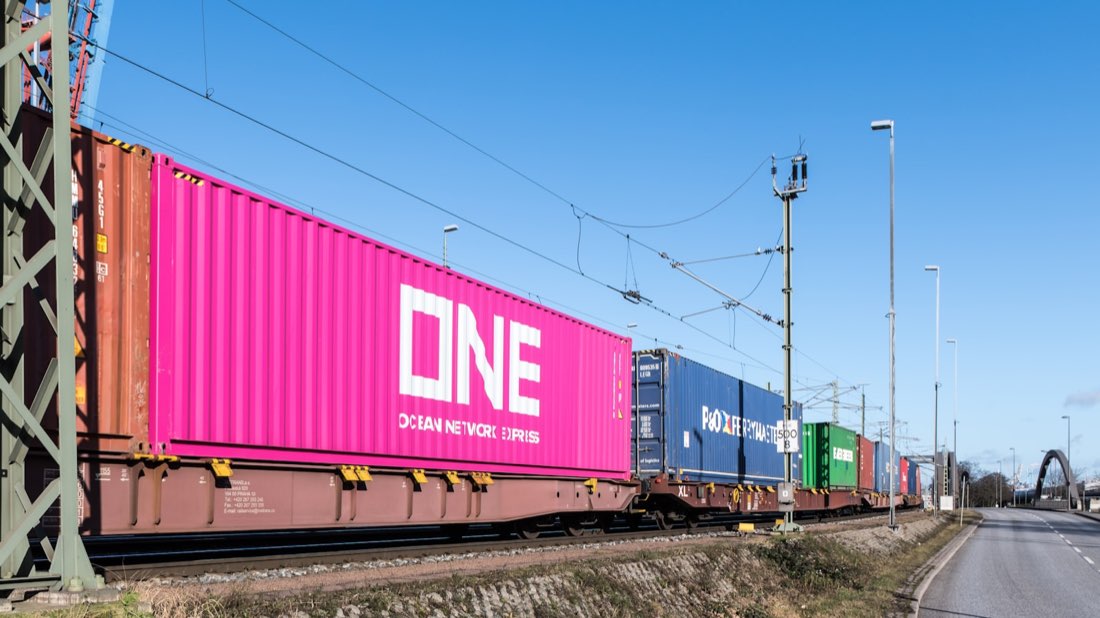
Rail between China and the Caspian crosses a change of track gauge. China runs 1435 mm standard gauge; Kazakhstan, Azerbaijan and the wider CIS network run 1520 mm broad gauge. At the border, most commonly Khorgos or Dostyk, containers are either lifted across to broad-gauge wagons or the bogies beneath the wagon are exchanged. This is normal and well handled, but it is why even a service marketed as a direct block train has a scheduled stop there.
It matters commercially for two reasons. It adds a handling point, so cargo that is fragile or poorly secured is exposed to a lift it might not have expected; and it is a place where a train can wait for capacity when volumes peak. We plan around it rather than leaving it out of the transit estimate, and we say where in the schedule it falls.
A block train runs as a complete formation to a fixed schedule and is the faster, more predictable option, but it is bought by the train rather than the container, so it suits regular volume or a shipper who can fill a substantial share of it. Single-wagon and grouped services attach your wagons to scheduled formations, which is more accessible for smaller volumes at the cost of a less certain timetable.
Most cargo travels in standard 20ft and 40ft containers. Open-top and flat-rack equipment is available for cargo that cannot be loaded through the doors, and temperature-controlled options exist on some corridors but not all, so availability has to be confirmed for the specific route and season rather than assumed. Loading and securing standards on rail are stricter than on road, and cargo that is inadequately secured will be rejected at acceptance.
The Trans-Caspian International Transport Route, usually called the Middle Corridor, runs from China across Kazakhstan, over the Caspian by ferry to Alat, then through Azerbaijan and Georgia toward Türkiye or the Black Sea. It is inherently multimodal — rail, a sea crossing, then rail or road — and it avoids transit through Russia, which is the reason most shippers ask for it.
The trade-off is real and worth stating plainly. Because it involves several modal transfers and a ferry with finite capacity, transit can be longer and more variable than the northern route through Russia, and the World Bank has documented both time and cost disadvantages against that alternative. Where a shipper needs Russia-free routing, it is the practical answer; where they simply want the fastest rail option and have no restriction, it may not be. We quote a realistic window rather than the best case.
Send the origin and destination stations or cities, the commodity and HS code, the container type and count or the loose cargo dimensions and weight, the readiness date, and whether the cargo is dangerous or temperature-sensitive. Rail schedules are less elastic than road, so the readiness date genuinely affects which departure a shipment can make and therefore the rate.
We then confirm equipment availability on the corridor, the customs treatment at each border, whether the cargo needs to be transhipped or can move on exchanged bogies, and where the movement is cleared. Rail is usually the cost-effective middle ground between sea and air on long-haul lanes, but it rewards planning further ahead than road does.
FTL & LTL, cross-border trucking
Learn moreFCL & LCL via global ports
Learn moreTime-critical & standard air cargo
Learn moreOversized, heavy & complex cargo
Learn moreClearance & documentation
Learn moreStorage, handling & distribution
Learn moreShare your shipment details with us and our logistics team will prepare a suitable transportation option based on your cargo, route, timing and requirements.