Road Freight
FTL & LTL, cross-border trucking
Learn moreCost-effective ocean shipping through major global ports. Whether you need a full container or consolidated space, we coordinate bookings, port handling and documentation, door-to-door or port-to-port.
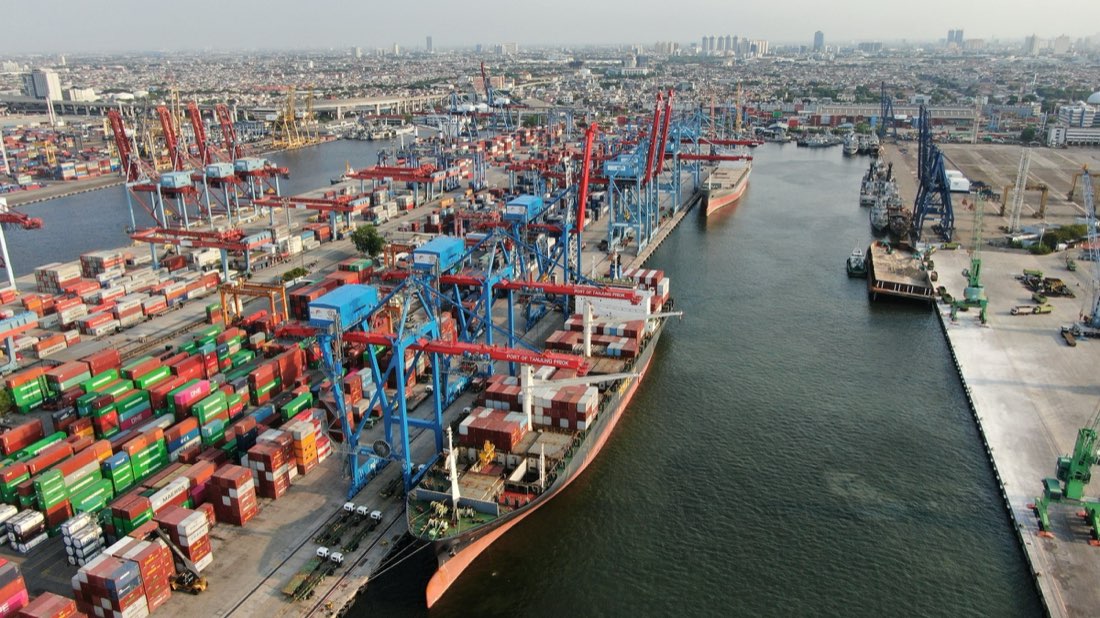
A full container (FCL) is booked as a unit: you pay for the box rather than the volume inside it, the container is sealed at origin, and it is usually the better choice once a shipment fills most of a 20ft or 40ft unit, or where the cargo should not be handled with anyone else's. Less-than-container (LCL) buys space in a consolidation instead, which suits smaller volumes but adds a consolidation window at origin and a deconsolidation step at destination.
Beyond standard dry boxes, we book reefer containers where a temperature range has to be held, flat-racks and open-tops for cargo that cannot be loaded through the doors or exceeds internal height, and high-cubes where volume rather than weight is the constraint. Cargo that is out of gauge in any dimension needs the equipment decided before the booking, because the stowage position and the lashing plan follow from it.
For Azerbaijani cargo the practical sea gateways are Poti and Batumi on the Georgian Black Sea coast, with the road or rail leg onward to Baku, and Alat on the Caspian for traffic moving to and from Central Asia. Which one is right depends on the origin, the equipment and what is actually sailing that week rather than on a fixed rule, so we quote the routing alongside the rate instead of assuming a default.
Transhipment matters more than shippers often expect. A routing with one transhipment is frequently cheaper and only marginally slower; one with two can introduce real schedule risk, particularly where the second leg is a feeder with limited sailings. We state the transhipment ports and the sailing frequency in the quotation so the trade-off is visible before the booking rather than after a missed connection.
Two charges get conflated routinely and are worth separating. Demurrage accrues when a container stays inside the terminal beyond the free days allowed; detention accrues when the container has left the terminal but has not been returned empty. They are billed by different parties under different clocks, and a delay in customs clearance can trigger one without the other.
A sea freight rate rarely covers everything that will be invoiced. Terminal handling at each end, documentation, customs clearance, inland haulage, and any surcharge in force at the time of sailing may sit outside it. We set out inclusions and exclusions in the quotation, together with the free time attached to the equipment, so the landed cost is not assembled from surprises after arrival.
The bill of lading is the core document and how it is issued changes what happens at destination. An original set has to be surrendered before release, which protects the shipper but slows collection if the documents travel slower than the vessel. A telex or express release removes that step and is usually the right call once payment is settled. Getting this decided at booking, not at arrival, avoids storage accruing while paperwork moves.
Alongside it we check the commercial invoice and packing list, the HS classification, the Incoterm and its named place, certificates of origin where a preference is claimed, and any permit or certificate the commodity requires. Where a letter of credit governs the shipment, the documentary requirements have to be read against the credit before the container is loaded, because a discrepancy found afterwards is expensive to fix.
FTL & LTL, cross-border trucking
Learn moreTime-critical & standard air cargo
Learn moreTrans-Caspian & East–West corridors
Learn moreOversized, heavy & complex cargo
Learn moreClearance & documentation
Learn moreStorage, handling & distribution
Learn moreShare your shipment details with us and our logistics team will prepare a suitable transportation option based on your cargo, route, timing and requirements.