Road Freight
FTL & LTL, cross-border trucking
Learn moreOversized, heavy and complex cargo needs more than a truck — it needs a plan. We handle project shipments from route survey and feasibility through permits, specialised equipment and final delivery on site.
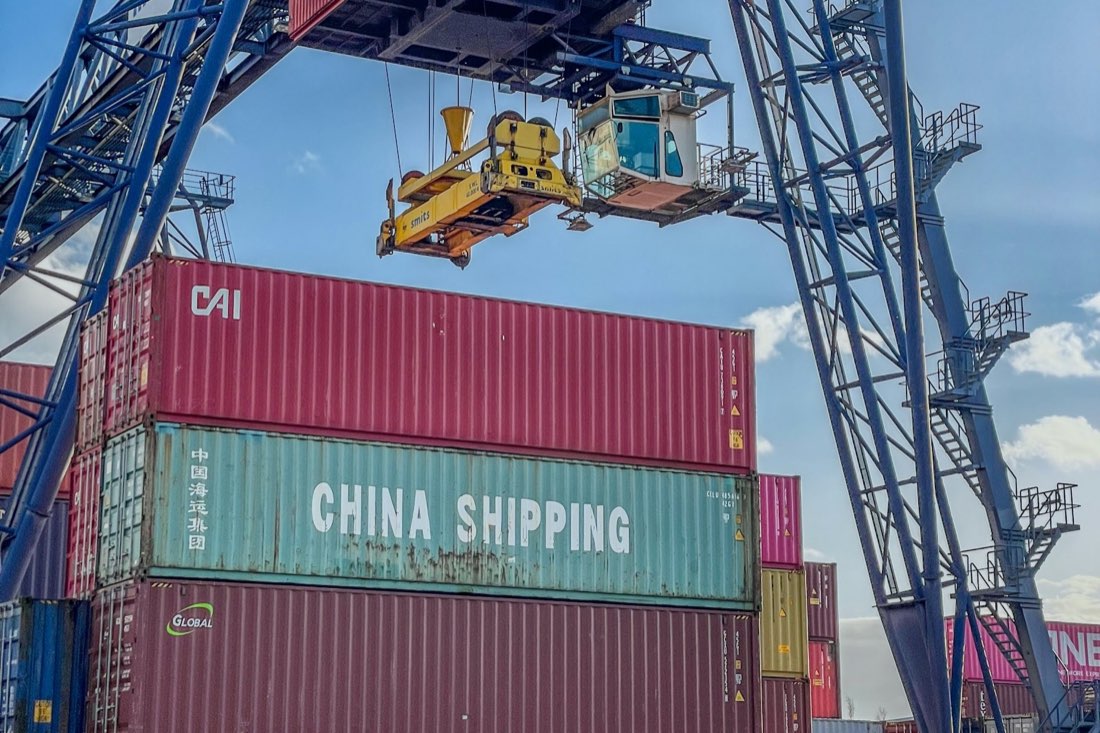
Project cargo is anything that cannot simply be booked onto standard equipment: pieces that are over width, over height, over length or too heavy for a normal axle configuration, and consignments where the pieces have to arrive in a particular order because a site can only receive them in that sequence. Transformers, generators, crushers, tanks, structural sections, cranes and process modules all fall into this category, as does ordinary equipment that has become indivisible once assembled.
The distinguishing feature is that the route decides the method, not the other way round. A piece that is one hundred millimetres too tall for a bridge on the direct road can force a different corridor, a different port, a different vessel, or a longer inland leg — and that decision has to be made before anything is booked, because reversing it after the cargo has moved is expensive.
For anything genuinely oversized we start with a route survey: bridge and culvert capacities, overhead clearances, turning radii, road widths and the condition of the final approach to site. That survey is what determines the permitted route, and the permitted route in turn determines which border crossing is usable and sometimes which country the cargo transits at all. Permits follow from it, and lead times vary by jurisdiction, so they belong at the start of the plan rather than the end.
Lifting is planned alongside it. Weight, centre of gravity and available lifting points decide the equipment: mobile cranes at both ends, or in some cases a self-propelled modular transporter, ro-ro rather than lift-on, or a heavy-lift vessel with the right gear. Where a piece must be lifted at a port, the terminal's crane capacity is a constraint on the routing, not an afterthought once the vessel is booked.
Most project movements into or out of the Caucasus and Central Asia use more than one mode: sea to Poti or Batumi and then heavy road inland, or rail across Kazakhstan with a Caspian ferry crossing at Alat. Each interface is a lifting operation and a set of formalities, and each one is where a schedule slips. We plan the handovers explicitly, including who owns the cargo at each point and who is responsible if a lift has to be re-sequenced.
Ro-ro and lift-on options are not interchangeable. Wheeled or tracked plant that can be driven on will usually move faster and cheaper by ro-ro, while an indivisible static piece may require a heavy-lift vessel and a booked crane window. That choice is made from the cargo drawings, which is why we ask for them before quoting rather than after.
Send drawings or a general arrangement with dimensions and weights per piece, the centre of gravity and lifting points where known, the total piece count, the origin and final site address, the readiness date and any site access constraint. Photographs of the cargo and of the final approach to site are genuinely useful, because they often reveal a constraint the addresses alone do not.
We will come back with the proposed route and mode, the equipment and lifting method, the permits required and their realistic lead time, and a schedule that names the interfaces rather than a single end-to-end number. On project work an honest schedule with identified risk points is worth more than an optimistic one, and we would rather have that conversation before the cargo is committed.
FTL & LTL, cross-border trucking
Learn moreFCL & LCL via global ports
Learn moreTime-critical & standard air cargo
Learn moreTrans-Caspian & East–West corridors
Learn moreClearance & documentation
Learn moreStorage, handling & distribution
Learn moreShare your shipment details with us and our logistics team will prepare a suitable transportation option based on your cargo, route, timing and requirements.